
The Road to Henry Plotnick's Tributaries
Or how I designed the cover of a brand new jazz album out April 30

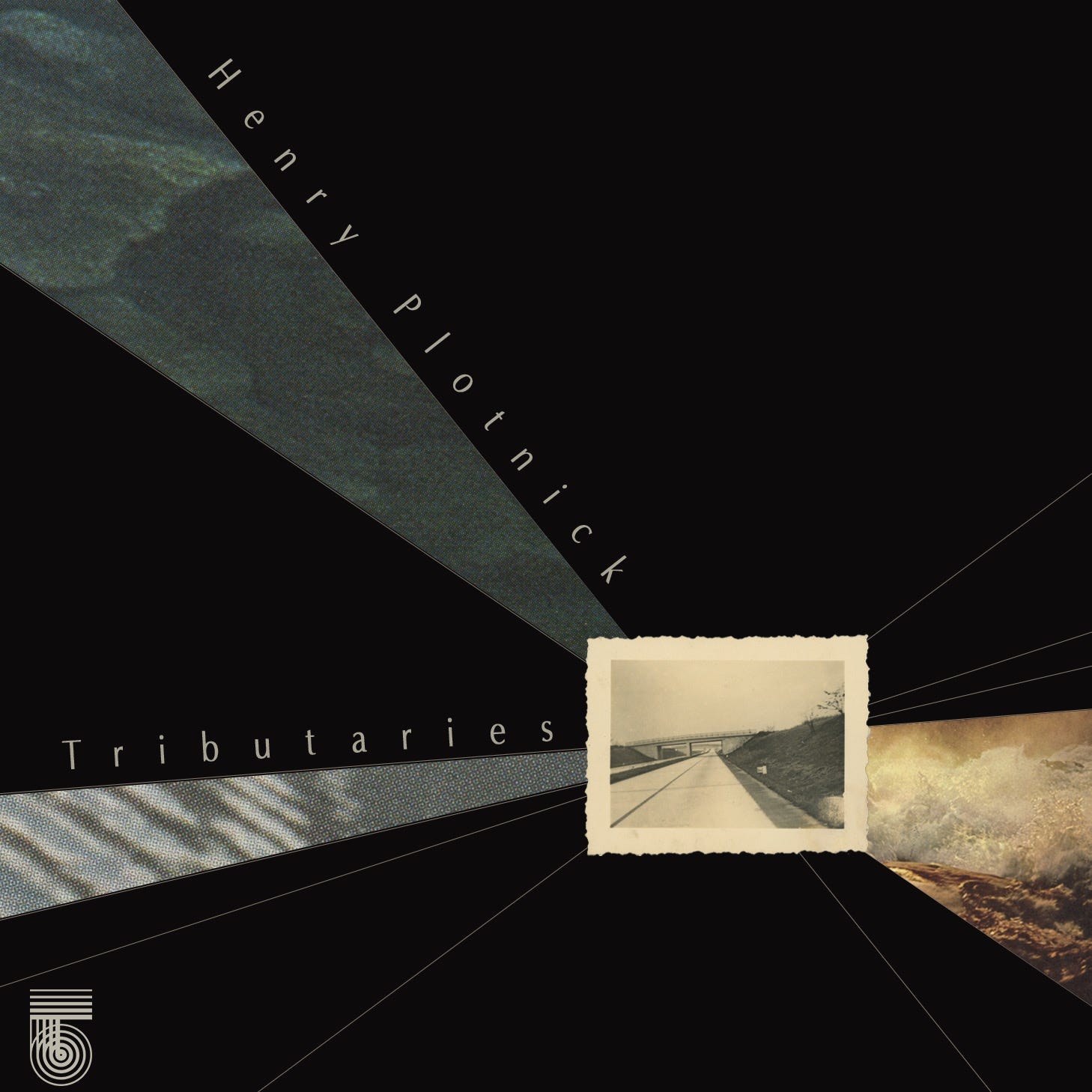
Last November, I received a text from musician Henry Plotnick asking me to design the cover for his next album. I have known Henry his whole life, watching him develop from a child prodigy (who released Fields, a collection of original modern classical compositions — think Eno and Glass — at age 11) to an accomplished contemporary jazz musician/composer. Now living in New York, where he graduated from The New School, Henry leads his own eponymous group (in various configurations), plays roots-rock Americana with The National Reserve, provides accompaniment for singer/songwriter Joelle Bensaid, and recently joined the groove-based experimental band Calapitter.
Henry provided me with a copy of the recordings alongside the title, Tributaries, mentioned an interest in water imagery, and then set me loose on the design. Often giving an outline to his collaborators and trusting them to bring their own unique talents to the mix, this was all the direction he felt comfortable providing, and, turns out, was all I really needed. I played the album in my studio on repeat for a couple weeks and made about a dozen sketches inspired by the vibe. After some whittling and a little back and forth, we arrived at the above.
Recorded at Long Island City’s GB’s Juke Joint in August 2023, Tributaries took a while arriving at its April 30, 2025 release date. Many of the album's compositions were written, arranged, refined, and performed with Henry's quintet while he was still in school. Shortly after graduating, he scored studio time, managed to coordinate the half-dozen busy collaborators he knew could execute this collection, and laid down tracks with Colin Mohnacs at the mixing board, who produced a crystalline recording wherein every instrument feels warm and present.
I have to admit I am massively unqualified to write about jazz. I don't have enough history with the genre to feel confident about description, influence, or technical terminology. The soundtrack to my life has been primarily punk/pop, favoring the moody, the goth, and the electronic.
However, I have been genuinely moved by Henry’s live performances the handful of times I’ve seen him play since he relocated to NYC. I have witnessed so many of his musical explorations over the quarter century of his existence, it’s impossible not to see echoes of previous Henrys whenever I encounter the one playing today. His musical palette and range becomes more potent and nuanced with every new iteration.
Though I do not understand how young jazz musicians are made, I know the best ones have figured out how to become one with their instruments, which Henry did at a shockingly young age, forming a one man band using a loop pedal and manipulating the various settings on his electric keyboard to produce improvised layered compositions live. Those performances were miraculous.
Today, Henry meshes with his fellow musicians to form a cohesive, multi-limbed, multi-talented organism whose purpose is to make gorgeous noise while exploring the limits of possibility within timing, texture, communication, and sound. Though I am not versed in this medium, I get the feeling Henry is a particularly generous band leader, creating compositions that provide enough structure to focus his collaborators’ efforts within original aural landscapes that supply rich opportunities for self expression.
I can definitely hear this reflected in Tributaries’ nine performances. There is an overall arc to the journey, established in the opening notes of the titular track. Muscular horns announce a lush musical landscape into which keyboards bubble, contained and propelled forward via steadily rolling drums. I hear water flowing and crashing, the churn and propulsion of an overwhelming need to move.
I imagine jazz as a secret handshake between people in possession of valuable decoder rings forged from years of practice and mountains of expertise, making them sensitive to one another's musical inflections, the information inside the bending or pausing of a note, a function of timing that indicates the right moment to harmonize, start, stop, or pass the torch.
Henry's belief in collaboration and confidence in his chosen collaborators makes me wonder if he has always had his sights trained on a larger picture that only he can clearly see. Is this true of all visionaries? While the rest of us stare at the immediately apparent, they glimpse some compelling extra something just beyond.
Tributaries has a retro feel to it, an homage of sorts to the cooler jazz of the late sixties/early seventies, without wallowing in nostalgia for a past Plotnick did not live through. (This is the property I tried to capture visually.) My limited frame of reference immediately summons Keith Jarrett, whose influence I hear in the twinkle and sway of the keys, especially on my favorite tracks ("Waverling," "Mind It," "Turn of the Sea," "Only This"). The steady beat behind “Waverling” reminds me of the Hugh Masekela hit “Grazing in the Grass,” which causes a chain reaction of other late sixties pop references including Bacharach/David and even the Room 222 theme song, covered in a previous post. The track swells and rides a delicate wave of hope.
Across the album’s nine compositions, horns are bright and beats lively — imagine birdsong and falling leaves, even a slight chill in the air. Tributaries has an autumnal wistfulness, a melancholy lilt embedded in its jazzy swing.
My favorite moments come near Tributaries’ end, when trumpet, keys, and guitar trade the melody on "Turn of the Sea," followed closely by the addition of flute and vocals to rise to a satisfying crescendo on “Only This,” the album's closer.
The deft playfulness of these original compositions creates the feeling of a lost classic. Or is that too hyperbolic? Perhaps Tributaries is an homage to a reference I have yet to encounter.
I’m happy to take my place among Henry Plotnick's many accomplished collaborators, my artwork serving as the image for fresh takes that immediately sound like old favorites.
Henry Plotnick: Tributaries drops April 30, 2025. Go get yours:
I'm happy to be a fellow fan of Henry's with you, Mark. A lovely write-up, and a great jazz album!
beautiful story, beautiful cover